
Last month, I wrote about tanking consumer confidence, and since then, it has gotten even worse. Since my last column, consumer confidence has fallen further and now has dropped to the lowest level in 70 years.
This fresh record low comes about as the war in Iran drags on, keeping energy prices elevated. I have said many times that nothing affects consumers more than that big, bright billboard that stares them in the face: the gas pump with the price-per-gallon hitting right between the eyes.
The University of Michigan’s latest consumer survey showed sentiment fell in early May to a preliminary reading of 48.2, the lowest on record going back to 1952. Sentiment had previously reached its lowest point just last month, below anything seen even during the Great Recession, the pandemic and the inflation surge afterward.
Still, record-low sentiment likely won’t translate into a pullback in consumer spending, which, as I have explained many times, is a whopping 70% of the U.S. economy. In the survey, about one-third of consumers spontaneously mentioned gasoline prices, and about 30% mentioned tariffs. Taken together, consumers continue to feel buffeted by cost pressures, led by soaring prices at the pump. And the authors of the survey further explain that Middle East developments are unlikely to meaningfully boost sentiment until supply disruptions have been fully resolved and energy prices fall.
Key Reason
A key reason why Americans haven’t cut back, despite feeling lousy about the economy: the U.S. labor market’s resilience. While hiring has tapped the brakes a bit compared to the robust post-pandemic years, layoffs haven’t risen more than usual, keeping a lid on the unemployment rate.
New employment data in May showed that unemployment held steady at 4.3% in April as employers added a stronger-than-expected 115,000 jobs that month after an even bigger surge in March, marking the strongest two-month increase since 2024, according to Bureau of Labor Statistics data. That was more jobs than expected for a second month in a row, and the unemployment rate held steady in April, indicating the labor market is holding up despite rising energy costs sparked by the Iran war.
The labor market may be gaining momentum after near-zero job growth last year, with hiring advancing across a variety of sectors, including healthcare, transportation and warehousing, and retail trade. After nearly a year of choppy hiring, back-to-back 100,000-plus payroll gains are genuinely good news. The report showcases a labor market that may be gaining momentum after near-zero job growth last year. It showed hiring advanced across a variety of sectors, and follows other data indicating layoff activity remains low.
I believe the labor market may not be booming, but it is proving harder to break than many feared.
Key Driver
The advance in hiring was led by healthcare, which has been the primary driver of job growth over the last year. Transportation and warehousing and retail trade both added the most jobs since 2024. Employment in couriers and messenger services added almost 38,000 jobs, the most since 2020. Manufacturing employment fell slightly.
Construction and leisure and hospitality payrolls rose for a second month after harsh winter weather likely disrupted hiring at the beginning of the year. Economists have pointed to the data-center buildout as a possible driver of demand for construction labor in 2026, even as homebuilding continues to be restrained by elevated interest rates.
A key question going forward is whether the Iran war, which has already driven inflation higher and pushed a gauge of consumer sentiment to record lows, will begin to weigh on hiring. Tax cuts are providing a tailwind for consumer spending and business investment, but a pullback in household demand or a sustained rise in input costs may prompt companies to recalibrate by shedding hours or positions.
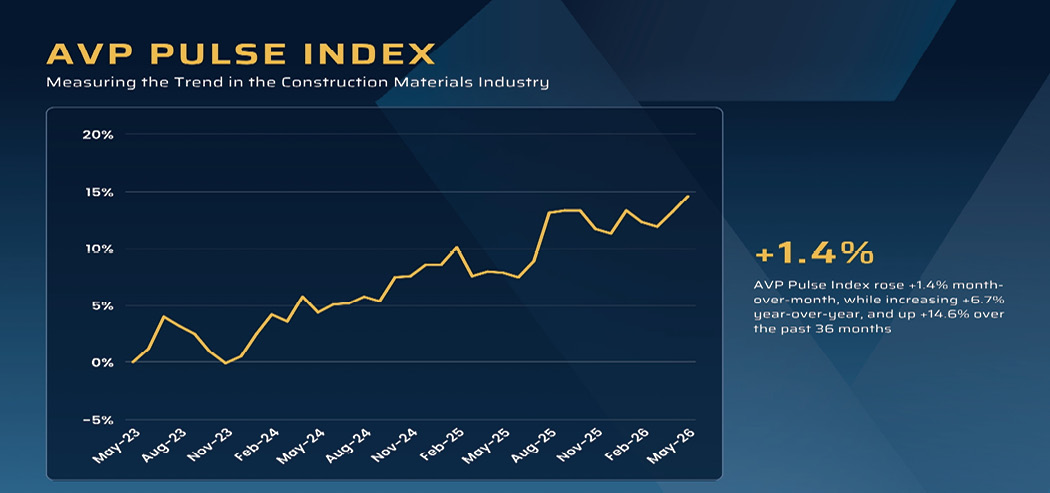
Regardless of what happens, I will repeat that the construction economy stands on its own and should remain steady or grow over the next couple of years.