
Prosperity. It sure doesn’t feel like it for many Americans. Last month I wrote about the consumer and the job market, and how consumers were still spending despite the war in Iran, fuel prices and inflation in all corners of where we spend our dollars.
It is a source of frustration for me that most Americans have enjoyed increased wages or salary raises that actually exceed the inflation of the past couple of years, yet they don’t take into account that their last paycheck was for more than the same period last year as the lean over the vegetable section at the supermarket and grouse over the increase in prices for lettuce and celery.
But prosperity is the one word to describe current economic conditions, and has been for many months now, as the economy has continued to barrel forward despite the downward pressures and perceptions of consumers on issues like housing affordability (which is very real) and inflation.
The U.S. economy is continuing to stack up wins, even if it doesn’t feel that way for many households because of the resurgence in inflation. The economy has now posted 78 consecutive months of expansion, the sixth-longest business cycle since 1854; this is well above the long-term average of 49 months and the median of 38 months.
By Comparison
By comparison, the longest period for the U.S. economy without a recession was between 2009 and 2020, at 128 months. The record of course was broken by the aftershocks of the COVID-19 pandemic, which ground the economy to a halt. The reality is that unconventional monetary policy, historically large budget deficits and the AI investment boom appear to be extending the duration of business cycles.
The data says the U.S. economy is remarkably strong. And to be sure, the U.S. economy is nearing an impressive achievement on the unemployment front, as the U.S. unemployment rate is nearing a record number of consecutive months below 5%, while the longtime record dates back to the mid-1960s.
It’s a worthwhile perspective to keep in mind as markets attempt to rationalize a surprisingly weak September jobs report. Employers added just 29,000 jobs, far below economists’ expectations for roughly 90,000 and below the prior 12-month average monthly gain of 45,000.
July’s employment was revised from a 21,000 gain to a 10,000 decline, and August’s employment was cut from 162,000 to 133,000. That put the two-month revision at 60,000 fewer jobs than previously reported. The unemployment rate ticked up to 4.2% from 4.1%, while the labor-force participation rate held at 61.8%, suggesting the rise in unemployment was modest rather than a sign of a sudden labor-market collapse.
Standing Firm
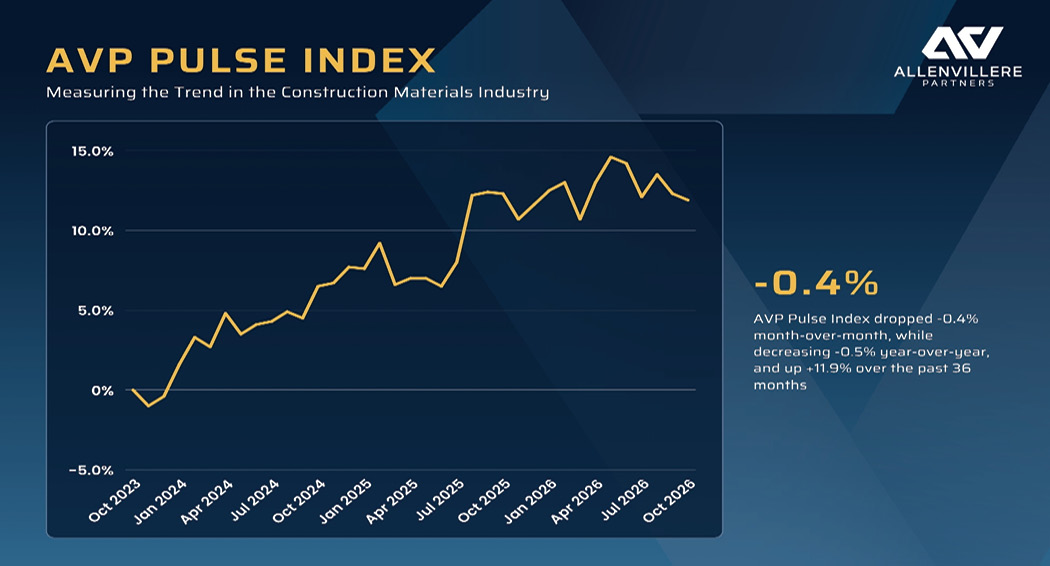
I continue to espouse our position: there is no slowdown, contraction or recession on the horizon, at least in the general construction space. And this despite a moribund housing market that has new starts down to lows not experienced in many years.
I have concluded that Congress will have to initiate legislation to close the affordability gap, and my suggestion is a mechanism from the 1970s that worked: buydowns of mortgage rates backed by the government.
This is the quickest way out of the affordability gap, as it would offer home buyers an instrument that lowers the rate on their home, and helps close the price gap between profitable construction costs and what buyers can afford to pay, an ailment that has afflicted the housing market since the increase in rates and the emergence of higher inflation.
Even with a slow new home market, construction will continue apace. Data centers, despite their unpopularity, will continue to be constructed in markets with less objection (i.e., my home state of Louisiana, where they are welcomed), and public and road work is continuing. Current aggregate volumes remain fairly steady, with only slight swings up or down from their average volumes of the last couple of years.
Expect the current steady market to continue, and with a break from high interest rates down the line, we’ll see the construction economy kick in to high gear.